
Quick return to service
Polyaspartic Floor Coatings in Pittsburgh, PA
A tough, clear-curing coating that resists sun and salt and lets you park again in about a day.
- Free on-site estimates
- Every slab gets a moisture reading before we coat it
- Written quotes that spell out the surface prep
A Faster Floor for a Short Season
Polyaspartic floor coatings in Pittsburgh solve two problems at once: a short window of good weather and the need to get the garage back fast. A polyaspartic floor coating belongs to the aliphatic polyurea family; it cures in hours rather than days and does not yellow in sunlight. We use it as a full system, as the top layer over an epoxy base, and as the clear coat over flake floors, on garages, shops and commercial spaces across the city and nearby towns.
How it differs from epoxy
The two resins behave very differently. HomeGuide lists polyaspartic at 2 to 6 mils per coat against 10 to 20 mils for epoxy, so it goes on thinner and is built up in more layers. It rates excellent for UV resistance, while epoxy rates poor to fair, which is why a polyaspartic topcoat is our default for any garage that gets afternoon sun. It also cures far faster. By HomeGuide's numbers, polyaspartic reaches full cure in 1 to 2 days and handles heavy vehicles at 24 to 48 hours, while epoxy can need a full week. For comparison, Bob Vila's guide puts foot traffic at 3 to 4 hours and vehicles at 24 hours, against 12 hours and 3 days for epoxy.
Why speed matters here
An unheated garage around Pittsburgh has a limited coating season. Late fall nights get cold, the slab cools with them, and with the average January daily mean under 29 degrees, winter is out for most unheated spaces. A system that cures in a day lets us fit a job into a stretch of good weather and get your car off the street before the next storm. For a household with one garage and one driveway on a steep hill, that matters more than it might elsewhere.
Fast cure means careful work
The same chemistry that makes polyaspartic quick also gives it a short working time once mixed. Bob Vila's cost guide calls it a poor choice for do-it-yourselfers for that reason. Our crews mix only small amounts at a time, coat one section after another and hold a wet edge so there are no lap marks. Surface prep is just as important as with epoxy: the slab is diamond ground, repaired and vacuumed, and we take moisture and dew point readings before each coat.
Salt, chemicals and wear
A cured polyaspartic surface is hard and dense. Salt brine, oil, antifreeze and road grime sit on it rather than soaking in, and the thin layers bond well to properly ground concrete. In a flake system, a polyaspartic clear coat over a full chip broadcast gives a floor that hides dirt, sheds slush and holds its color through years of open-door summers. HomeGuide lists polyaspartic lifespan at 10 to 20 years or more when it is installed and kept up properly.
For businesses that cannot close for long
According to Bob Vila, a polyaspartic floor may keep a business shut for just a day or two. That is useful for auto service bays, retail back rooms, clinics and small warehouses that lose money every day the floor is down. We can phase a larger floor so one section cures while another stays in use, and we schedule around your opening hours. Ask about it when you call.
Is it worth the extra cost?
Polyaspartic generally carries a higher per-square-foot price than epoxy. If your floor sits in a dark, below-grade space and you can wait a week to park, a well-installed epoxy system may serve you just as well. If the garage door faces the sun, if you need the space back fast, or if you want the longest-lasting clear coat over flake, polyaspartic is usually worth it. We price both options side by side when that helps you decide. Get a free estimate
Ways We Use Polyaspartic
Polyaspartic can be the whole floor or just the layer that takes the abuse.
Full polyaspartic system
Primer, base and topcoat all polyaspartic for the fastest return to use.
Polyaspartic over epoxy
An epoxy base for build and a polyaspartic topcoat for UV and wear.
Clear coat over flake
The final seal over a chip broadcast floor.
One-day garage schedule
Grind, coat and finish in a single visit when the slab and weather allow.
Phased commercial work
Sections coated in turn so a business can keep part of the floor open.
Grit for traction
Fine aggregate added to the topcoat on floors that get wet.
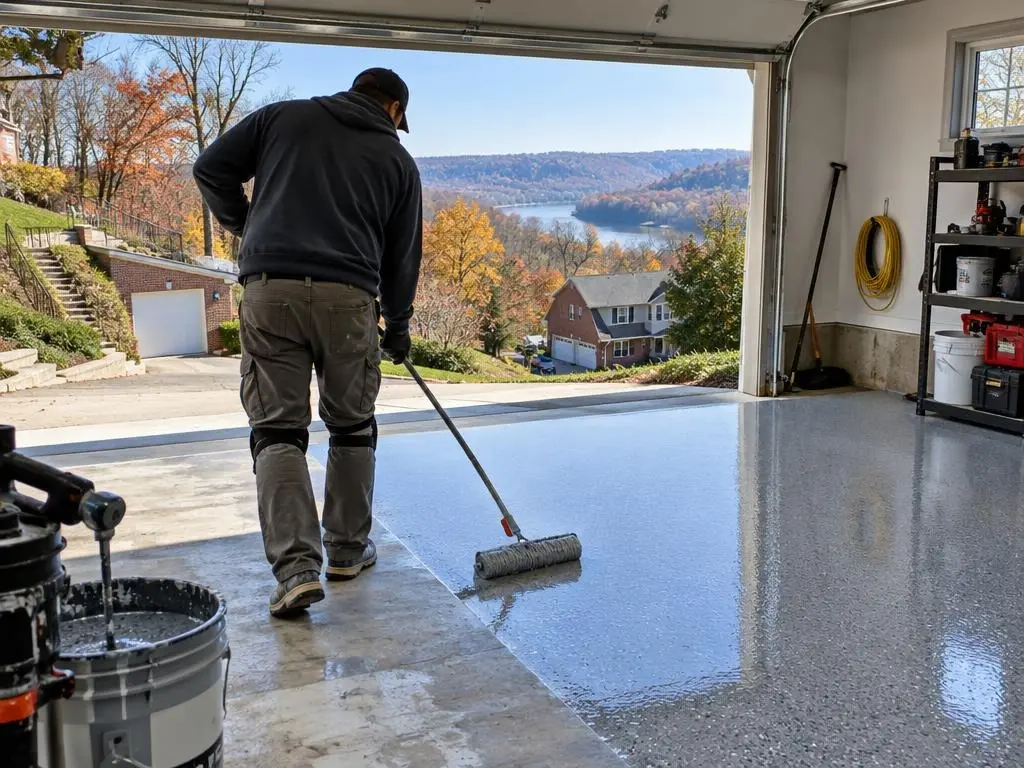
Typical Polyaspartic Coating Costs
| Floor or item | Published range | Source |
|---|---|---|
| Installed polyaspartic, per square foot | $5 to $12 | HomeGuide |
| One-car garage | $1,400 to $4,700 | HomeGuide |
| Two-car garage | $2,000 to $6,900 | HomeGuide |
| Three-car garage | $2,900 to $10,400 | HomeGuide |
| Per square foot, alternate estimate | $4 to $9 | Bob Vila |
| Typical total project | $1,440 to $3,240 | Bob Vila |
National ranges from HomeGuide's polyaspartic cost guide and Bob Vila's polyaspartic guide; the two sources measure differently, so their ranges do not line up exactly. Your slab condition and the system we agree on set your price, and we put that figure in writing before any work starts.
How a Polyaspartic Floor Goes Down
1. Test and plan
Moisture test, measurements and a weather check for the install window.
2. Grind and repair
Diamond grinding, crack and pit repair, and a thorough vacuum.
3. Coat in sections
Small batches applied with a wet edge, with readings taken before each coat.
4. Flake and topcoat
Chip broadcast if chosen, then the clear polyaspartic seal with grit.
5. Back in use
We give you walk and park times, usually within a day for vehicles.
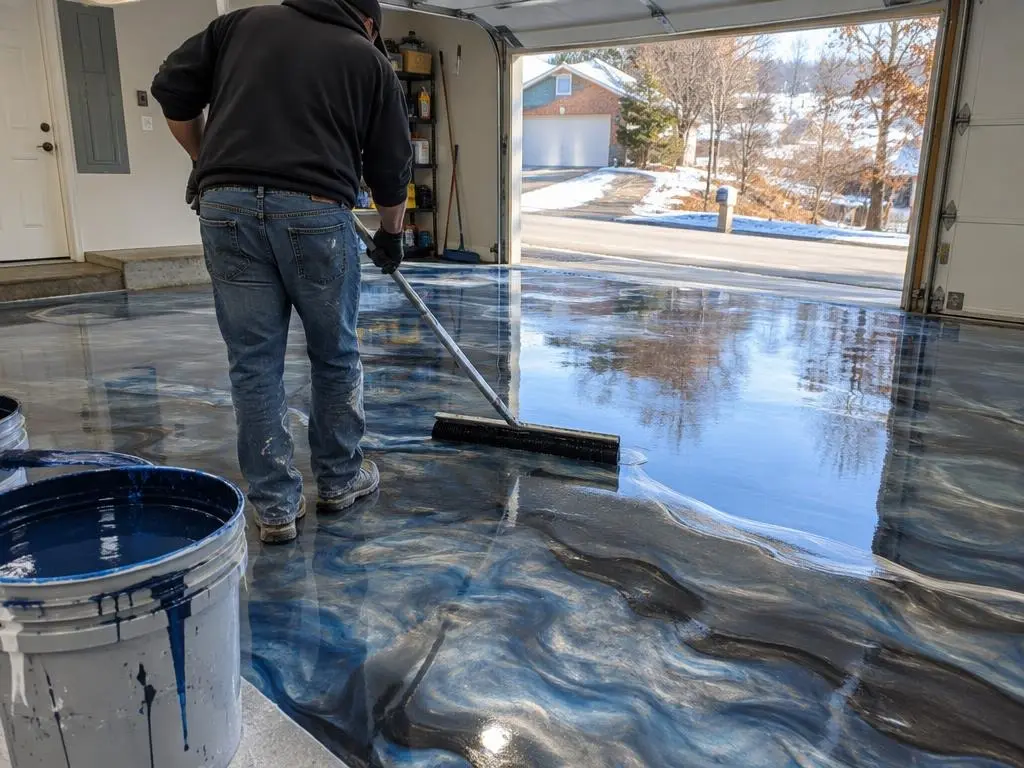
Why Choose Us for Polyaspartic Floor Coatings
Small-batch application
Short pot life means careful mixing and sectioned work, which is how we apply it.
Side-by-side pricing
If epoxy would serve you as well, we show both prices.
Scheduled around weather
We plan unheated garages for good slab temperatures and move dates when needed.
Polyaspartic Floor Coatings Questions
What is a polyaspartic floor coating?
It is a fast-curing aliphatic polyurea coating. It goes on in thin coats, resists UV, and is usually ready for cars in about a day.
Is polyaspartic better than epoxy?
It is better in sunlight and much faster to cure. Epoxy goes on heavier with each coat and is the cheaper of the two. Many of our floors use both: epoxy for the base and polyaspartic on top.
Can I install polyaspartic myself?
We do not recommend it. Its working time after mixing is short, and Bob Vila's guide calls it a poor DIY choice for that reason. Lap marks and poor bonding are common results.
How long does a polyaspartic floor last?
HomeGuide lists a lifespan of 10 to 20 years or more for a properly installed and maintained floor. Prep quality has a lot to do with reaching that.
Can you coat a garage in late fall?
Often, yes, if the slab is warm enough on the day. Fast cure helps us fit a job into a good-weather stretch before winter.
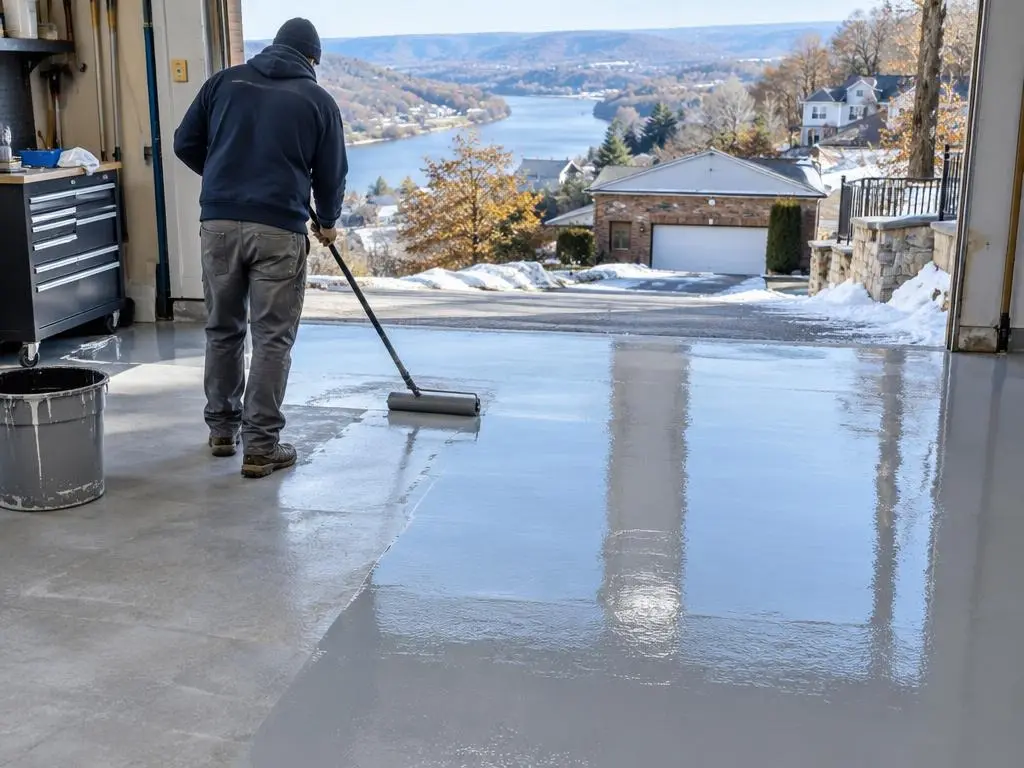
Polyaspartic Floor Coatings Service Areas
- Epoxy Flooring in Pittsburgh, PA
- Epoxy Flooring in Mt. Lebanon, PA
- Epoxy Flooring in Bethel Park, PA
- Epoxy Flooring in Upper St. Clair, PA
- Epoxy Flooring in Monroeville, PA
- Epoxy Flooring in Penn Hills, PA
- Epoxy Flooring in Ross Township, PA
- Epoxy Flooring in McCandless, PA
- Epoxy Flooring in Cranberry Township, PA
- Epoxy Flooring in Pine Township, PA
- Epoxy Flooring in Moon Township, PA
- Epoxy Flooring in Robinson Township, PA
- Epoxy Flooring in Bridgeville, PA
- Epoxy Flooring in South Park Township, PA
- Epoxy Flooring in Plum, PA
- Epoxy Flooring in Murrysville, PA
- Epoxy Flooring in Fox Chapel, PA
- Epoxy Flooring in Shaler Township, PA
- Epoxy Flooring in Baldwin, PA
- Epoxy Flooring in West Mifflin, PA
- Epoxy Flooring in McKeesport, PA
- Epoxy Flooring in Bellevue, PA
- Epoxy Flooring in Canonsburg, PA
- Epoxy Flooring in Peters Township, PA
Get a Polyaspartic Floor Coatings Estimate
Ask for a polyaspartic quote, with an epoxy option beside it if you want to compare.